3 tips to revive orchids after your holiday

Orchids can survive without care for a little while, but after a few weeks away on holiday, the effects are hard to miss. Dry roots, drooping leaves, or dead flowers are common signs of neglect. Fortunately, this doesn’t mean your orchid is beyond saving! Read on for 3 tips to revive your orchids after your holiday.

How to revive orchids after your holiday

Watering your orchids

Watering is by far the most important part of orchid care, so it’s the first thing you should do when you return home. If your orchids are still in their original (plastic) inner pots, the best method is to use the soaking technique. This involves giving your plants a ‘bath’ by submerging them in water for 5–10 minutes. You can use a bowl, container, bucket, or even the sink.

By placing an orchid in water while it’s still in its inner pot, the roots will soak up the moisture they need. Be sure to let the plant drain thoroughly afterwards, as orchids do not like to sit in water—wet feet can lead to root rot.

Also read: 3 ways to water your orchid

Remove dead flowers and leaves

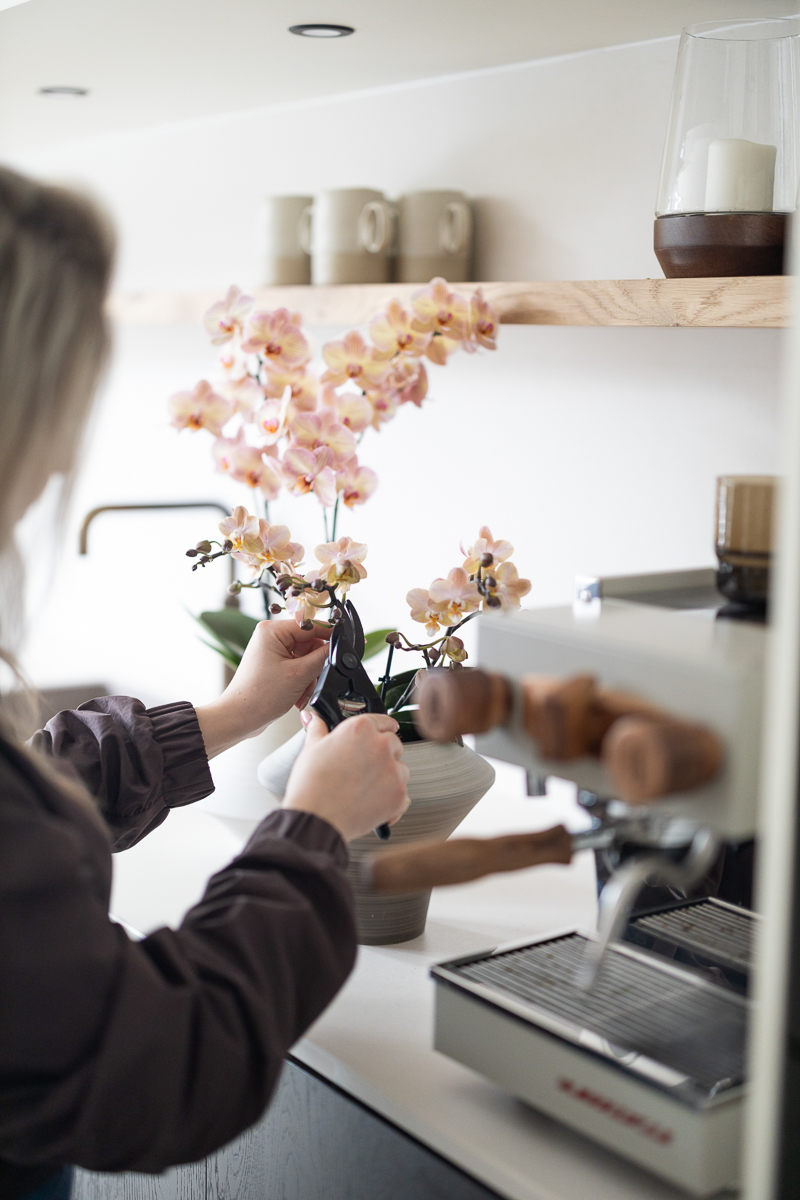
Next, it’s time for a bit of a clean-up. If your orchids have some dead flowers or leaves, despite your efforts before going away, it’s best to remove them. This helps the plant conserve energy for new growth. Wipe any dust off the leaves as well, so the plant can absorb light more easily and start photosynthesising properly again.

Provide indirect sunlight

Many people close all the curtains before heading off on holiday, which means your orchids may have gone without proper daylight for some time. After returning home, place your plants in a spot with indirect sunlight—ideally a few feet away from a window. This kind of light is perfect for orchids, as it provides enough brightness without the risk of sun damage.
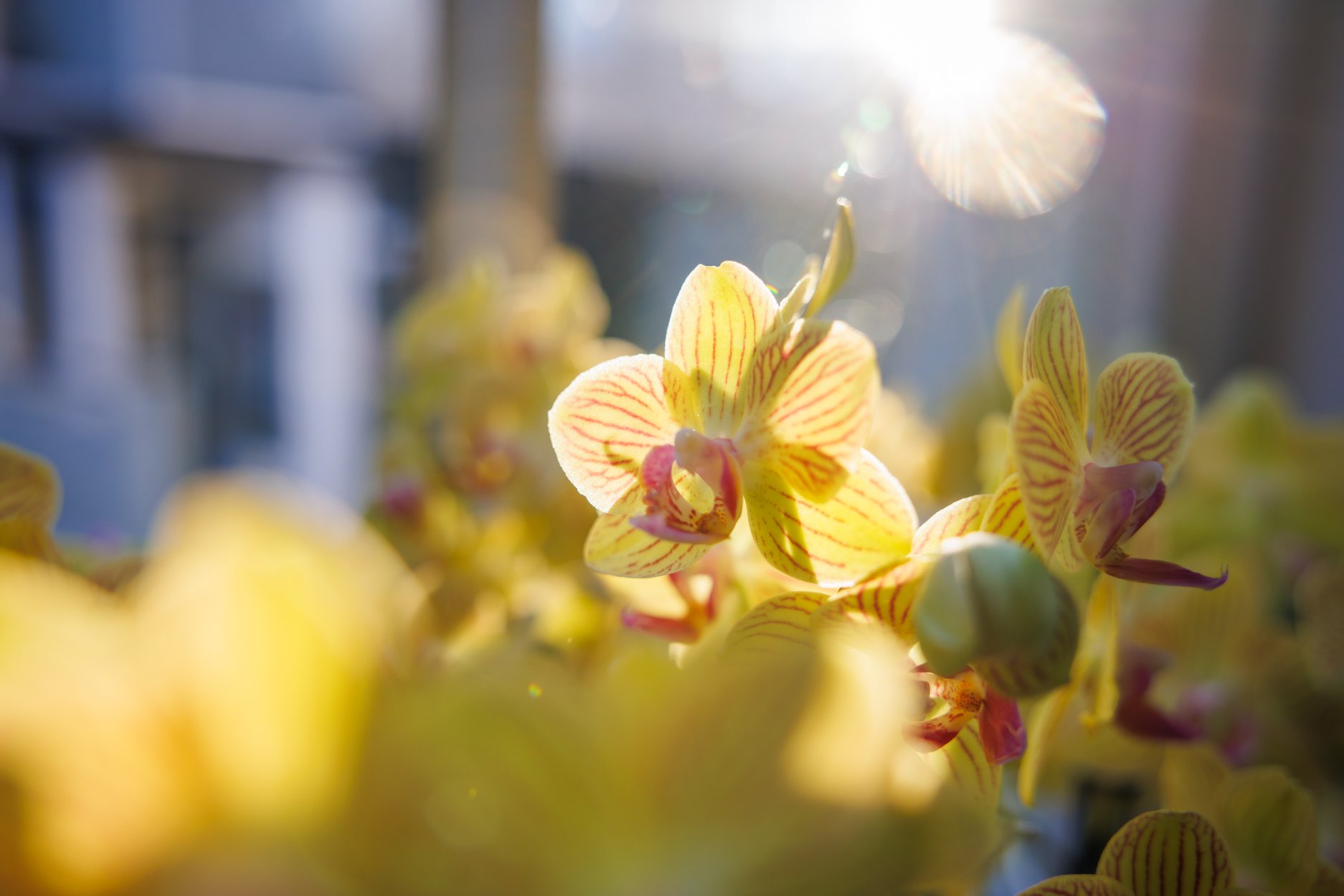

How to protect orchids from the summer heat

During the summer heat, it’s not just us who struggle — our plants do too. A little extra care for your orchids can go a long way. In this article, you’ll learn how to protect them from the heat, so your orchids can thrive and bloom beautifully all summer long.

How to protect orchids from the summer heat


Avoid direct sunlight

Make sure your orchids are placed in indirect sunlight. This means a spot where they receive daylight, but are not exposed to direct sun. For example, a window facing north.

You can also create indirect sunlight by using curtains or a window film. These help filter the sunlight, allowing some light through while blocking the harsh direct rays. Another option is to place your plant a few meters away from a south-facing window.

Also read: The difference between direct and indirect sunlight


Water your orchids regularly

In the summer heat, check regularly whether your orchids need water — ideally once or twice a week. Look at the roots: if they’re green, they have enough water. If they appear grey, it’s time to water them.

The best way to water your orchid is to place it in a bowl of water for 5–10 minutes, allowing the roots to soak up moisture. Let the plant drain thoroughly before placing it back in its pot.


Be careful with air conditioning

Do you enjoy turning on the air conditioning or a fan in summer? Be mindful of your orchids, as they don’t respond well to sudden temperature changes or draughts. Make sure there’s enough distance between the plants and the cold air, or consider moving them to another room temporarily.

Also read: Patio proof orchids: these orchids can go outside


5 tips for maximum bloom

Have you just bought an orchid or are you planning to get one? Then of course you want to enjoy this beautiful plant for as long as possible. There are a few things you can look out for to ensure you buy and maintain an orchid in top condition. That’s why we’re giving you 5 tips for maximum flowering enjoyment.


1. The more open flowers, the more flowering enjoyment

At the grower’s greenhouse, orchids are kept under ideal conditions (light, temperature, humidity). There, almost all buds can open without any problems. As soon as the plant leaves the greenhouse and ends up in transport, shops or living rooms, it is exposed to changing conditions (drier, colder, draughts, less light). This can prevent some of the flower buds from opening. When buying a new orchid, choose one where at least half of the flowers are already open. That way, you can be sure that it will bloom immediately and there is a greater chance that the remaining buds will be ripe enough to open as well.


2. Place the orchid in a bright spot

Orchids love lots of light, but not direct sunlight. Fortunately, this does not mean that you can never place an orchid in a window frame. Just choose a window where the orchid will not be exposed to direct sunlight.


3. The ideal temperature: 15 – 25

Orchids are tropical plants by origin. That is why they thrive at room temperature. Therefore, maintain a temperature between 15 and 25 °C to enjoy your orchid for as long as possible.


4. Keep the orchid away from a fruit bowl

It is best to keep your orchids away from the fruit bowl. Ripe fruit produces ethylene, which flowering orchids do not like. This can also cause bud, flower and leaf drop.


5. Avoid draughts

Make sure your orchid is not in a draught. A little fresh air now and then certainly won’t hurt, but be careful with windows and doors that are often open. Cold or dry air currents can cause the buds or flowers to fall off your orchid more quickly. Orchids also don’t like being close to the heating. In summer, when the heating is off, this is of course not a problem.


Bonus tip: extra nutrition for a flowering boost

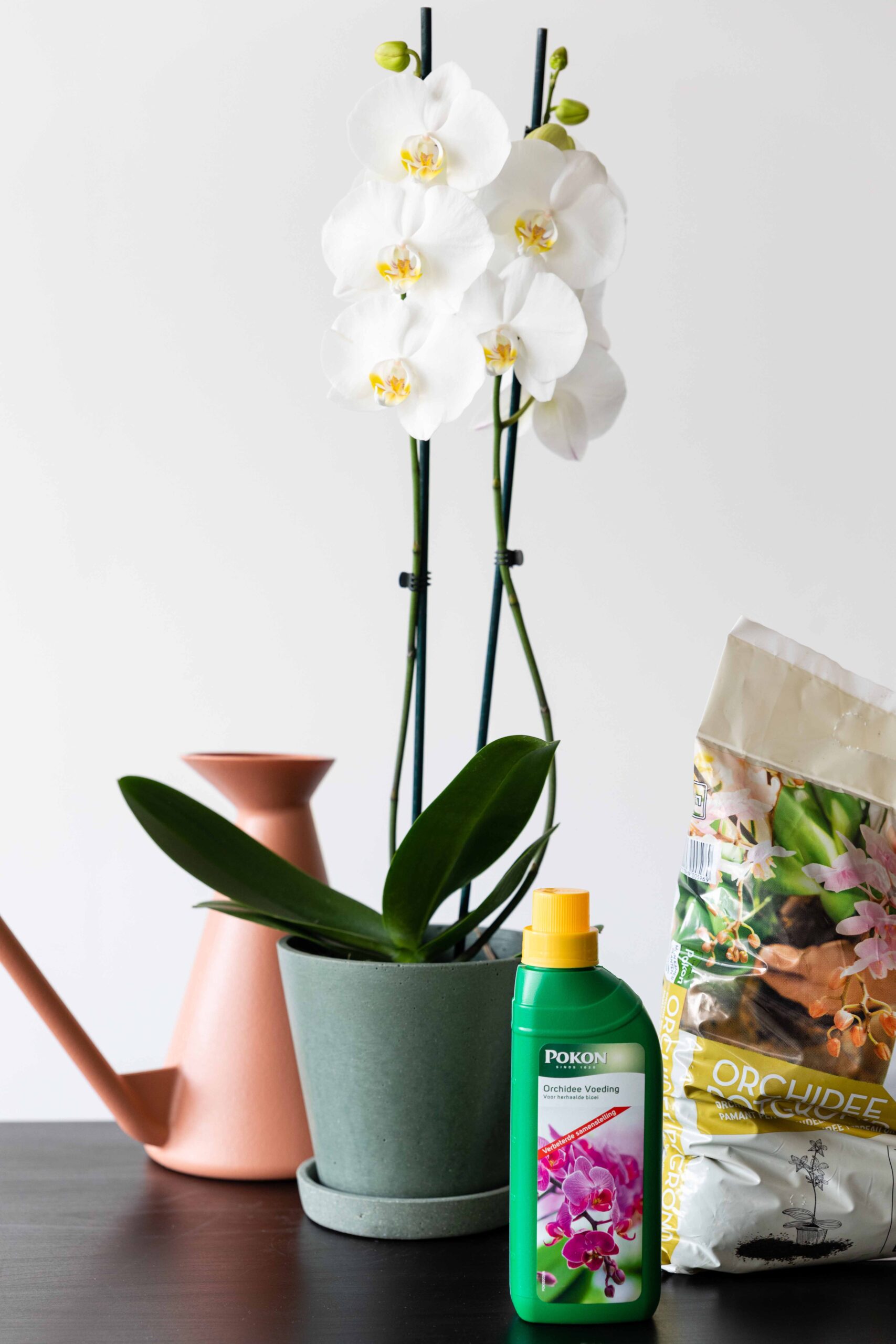
You can make orchids shine even more by giving them a little extra nutrition. Give the orchid a little orchid fertiliser once a month in summer and once every two months in winter. Use special orchid fertiliser to ensure that it has the right composition.


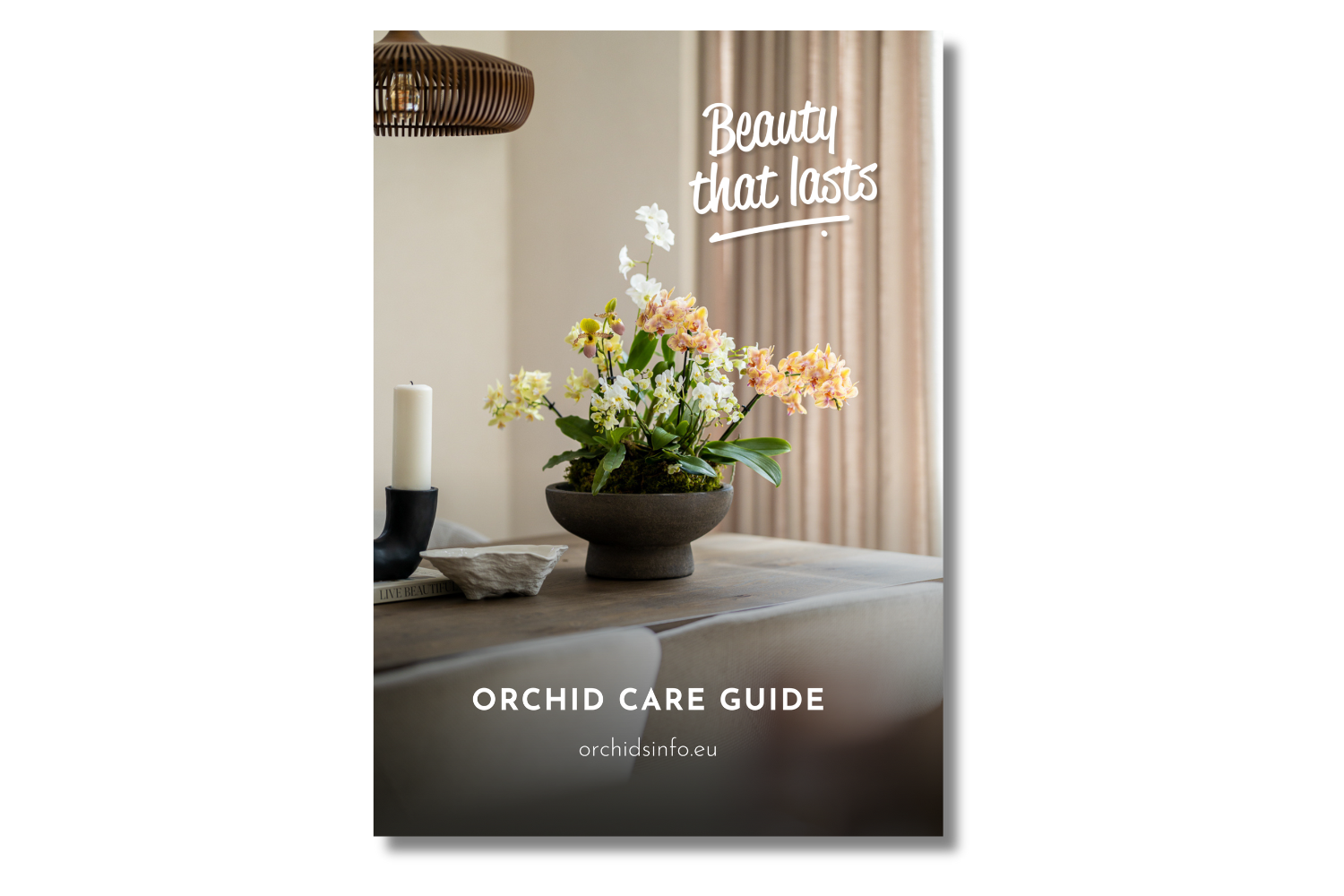
Want to know more detailed care tips? Check out the orchid care guide.

How much light do orchids need?

Light is one of the most important factors in plant care, as plants cannot thrive without it. However, the amount of light needed varies between plants. That’s why it’s useful to know the specific preferences of each houseplant. Wondering how much light do orchids need? Read on to find out!

How much light do orchids need?


Orchids require plenty of light, but it’s crucial to ensure they are not placed in direct sunlight. Direct sunlight can cause leaf scorch and other issues. Therefore, place your orchid in a spot with plenty of indirect sunlight.


What is indirect sunlight?

So, what exactly is indirect sunlight? It refers to a spot in your home where the orchid receives daylight, but isn’t exposed to direct sun rays. For example, a north-facing window is ideal. You can also create indirect sunlight by using curtains or window film to filter the sunlight. This allows light to pass through while blocking the harsh, direct rays. Another option is to place your orchid a few feet away from a south-facing window.


Check this video when placing your orchid at home:


Dit bericht op Instagram bekijken


Een bericht gedeeld door OrchidsInfo (@orchidsinfo)


What are signs of too much or too little light?

If an orchid gets too much sunlight, it may grow limp, its leaves can burn, or its buds may drop. This indicates it’s time to move the plant to a spot with less direct sunlight.

On the other hand, if an orchid receives too little light, its leaves may turn yellow, become limp, and no new shoots will appear. This is a sign that the plant needs to be moved to a brighter location.

Also read: How to make orchids bloom again?


Follow us on Instagram, Tiktok, Facebook, or Pinterest for more inspiration and care tips!


How to care for your orchid in summer: 4 tips

Summer is here! And that means more light, more sun, and a bit more warmth indoors. These changes also affect your orchids, so it’s time to adjust their care a little. Read on for four tips on caring for your orchid in summer.

Also read: Bring spring into your home: 3 ways to update your interior for spring

How to care for your orchid in summer


Watering

Water your orchid once or twice a week. Ideally, do this by placing the plant in a bowl of water for about 5-10 minutes, allowing the roots to soak up moisture. Let it drain well before placing it back in the pot. To give your orchid an extra boost, you can add orchid feed once a month. Use 10 ml feed per 1 litre of water.


Sufficient daylight

Place the orchid in a bright spot, but avoid direct sunlight. As the sun becomes a little stronger in summer, the spot that was perfect all winter might now be too sunny. Avoid dark corners, as orchids that don’t get enough light will produce few or no flowers.


Reblooming

Did you know that an orchid can bloom multiple times? You can enjoy this plant for years! Summer is the perfect time to encourage an orchid to bloom again. With increased sunlight and warmer temperatures, orchids often develop new buds.


Also read: How to help your orchid rebloom in the spring


The ideal temperature

The ideal room temperature for an orchid is between 15 and 25°C. Ensure the plant isn’t exposed to draughts or placed too close to a heater.


Watch this video as well:

@orchidsinfo

3 simple tips for orchid care in spring! 🌞 #orchidcare #spring #plantcaretips #springplantcare #orchids

♬ Try Something New – Alex Arias & Alexander Julius Wright

Explained: the care icons on an orchid label

When you buy a new orchid, it comes with a label that includes various care icons to help you look after your new plant. Nothing complicated, but useful to know! To make sure you understand them, we’re breaking them down in this article: this is what the care icons on an orchid label mean.

The care icons on an orchid label


Light

Place the orchid in a light spot without direct sunlight. This means a location where the plant receives daylight, but isn’t in full sun. For example, in a north-facing window or a few metres from a south-facing window. You can also create indirect sunlight by hanging curtains or applying window film.

Also read: Where should I place an orchid in my house? The 4 best spots


Feeding

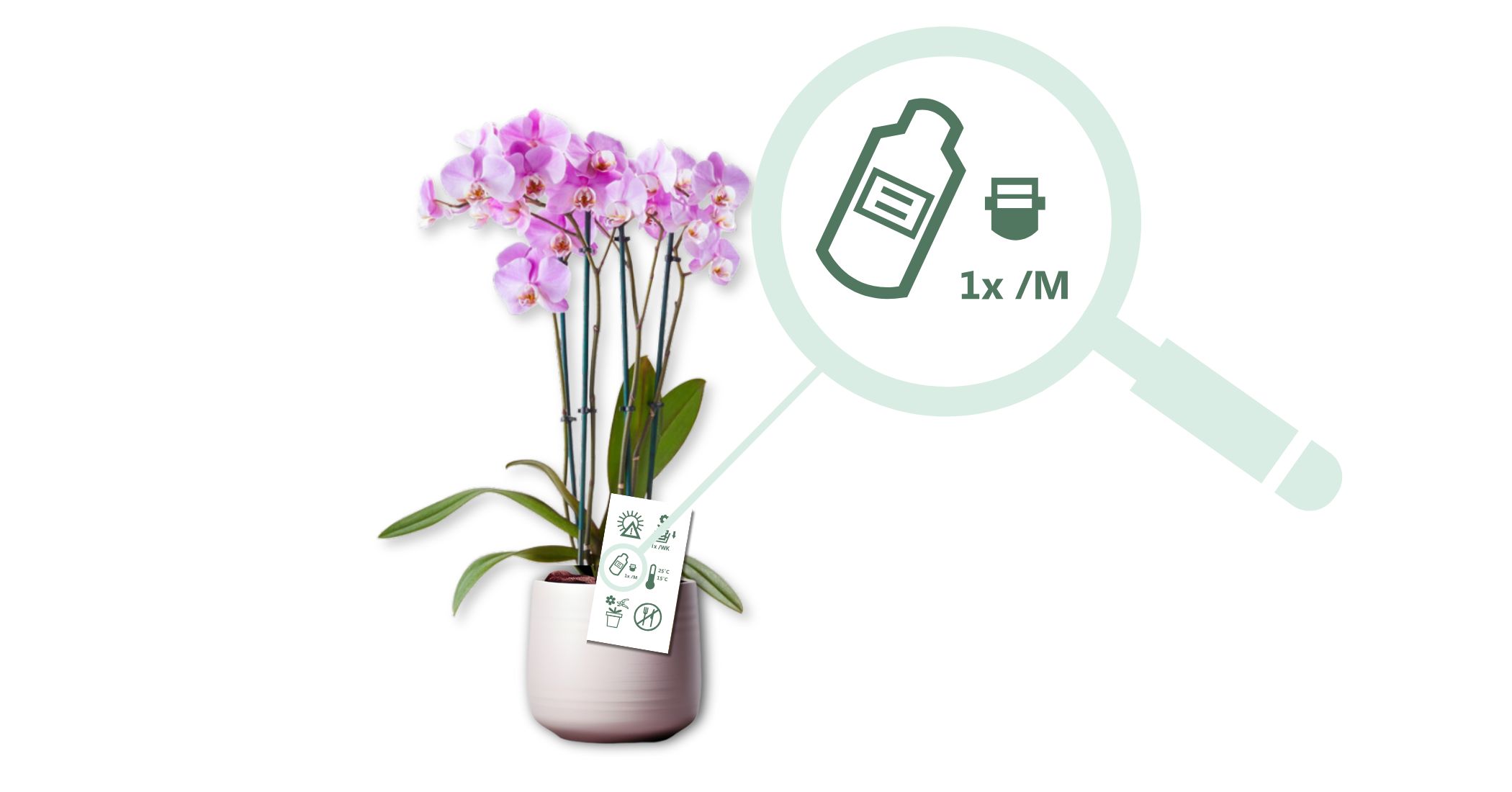
The orchid will happily bloom without additional feeding, but for optimal flowering pleasure feed it once a month. Add 10 ml of orchid feed per 1 litre of water.


Water

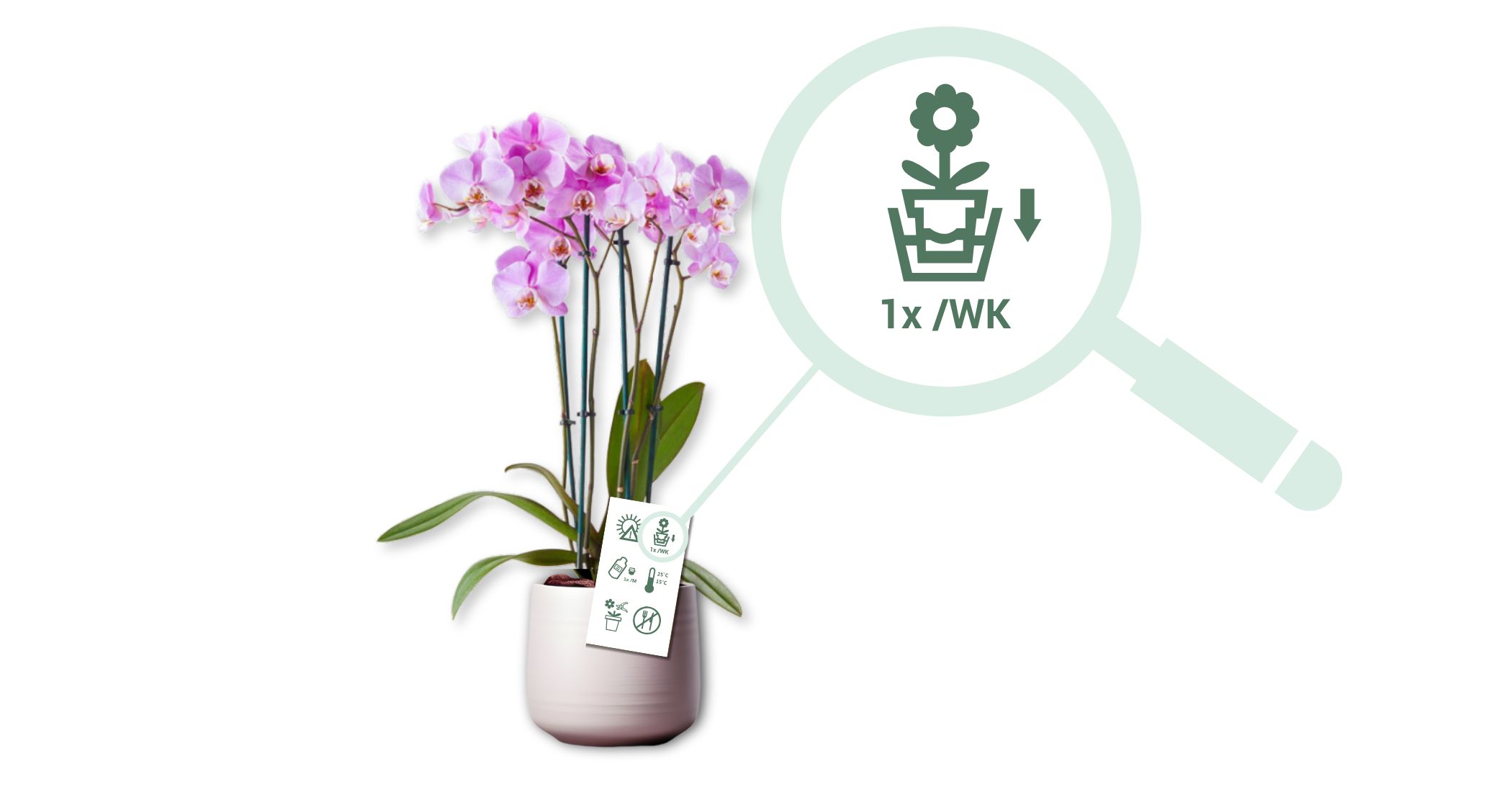
Place the orchid in a layer of water for about 10 minutes once a week. Allow to drain and return it to the planter.


Reblooming

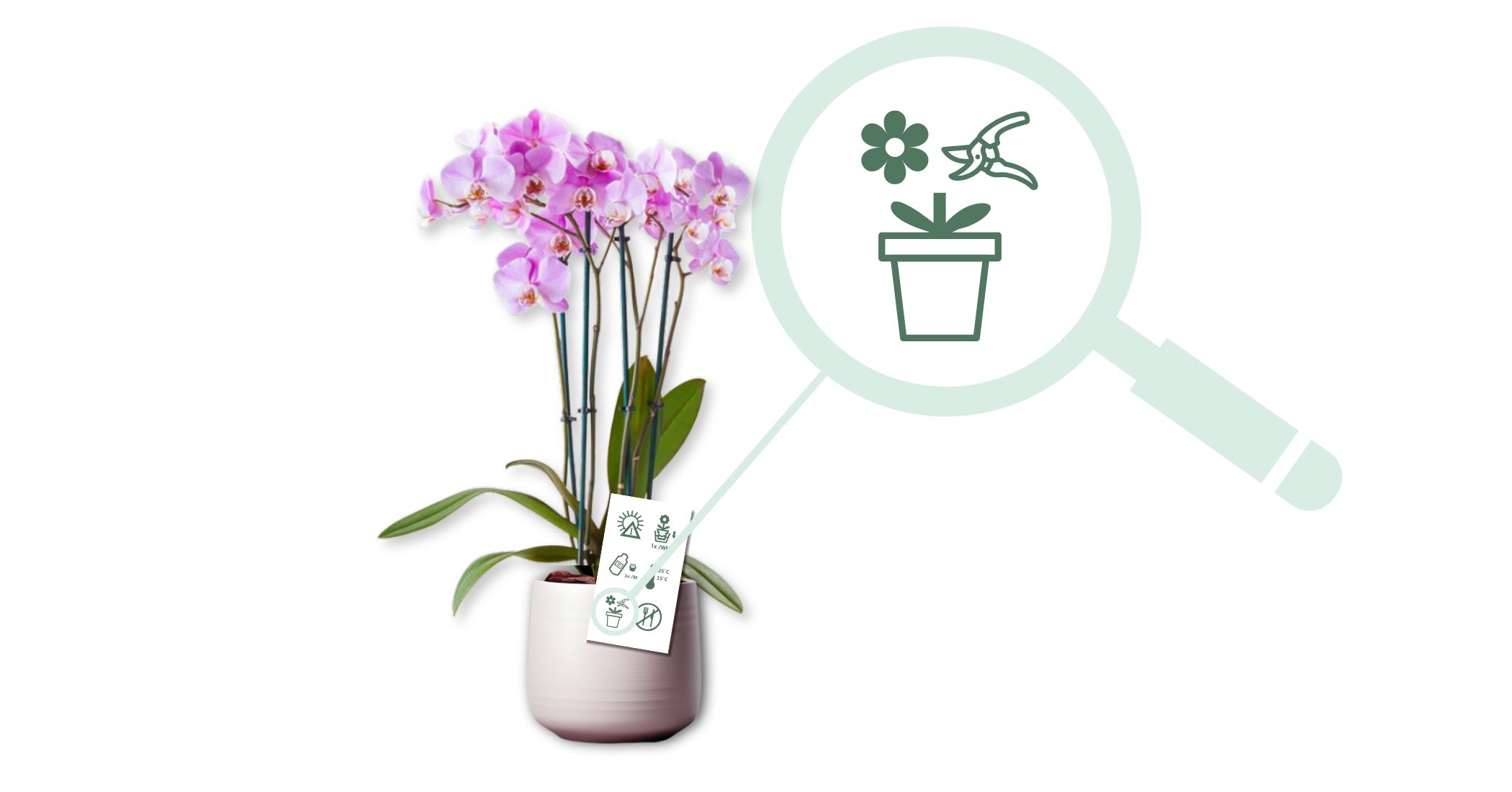
Cut off a spent stem above the second ‘eye’ (the thickening on the branch) from the roots. Water the plant a little less and place it in a cooler spot until new buds begin to form.

Also read: How to make orchids bloom again?


Temperature

Maintain a temperature of between 15°C and 25°C.


Not edible

Orchids are not meant for consumption.


Also watch this video:

@orchidsinfo

This is what the care icons on the label of an orchid mean – nothing complicated, but useful to know! #orchidcare #neworchid #orchidscare

♬ I Can Feel It v3 – Nick Sena and Danny Echevarria

The difference between direct and indirect sunlight

If you’re looking for care tips for orchids, you’ll often read that the best place to keep an orchid is a bright spot without direct sunlight. But what exactly does this mean? In this article, we’ll explain the difference between direct and indirect sunlight, so you can easily find the best spot for your orchid from now on.

Also read: How to care for an orchid

The difference between direct and indirect sunlight

Light is one of the most important factors in plant care, as plants cannot thrive without light. However, the amount of light needed varies between plants. That’s why it’s useful to know the specific light preferences of your plants.

It’s also wise to consider what type of light you have in your home. Windows facing west, for example, get a different amount of sunlight than those facing east. West-facing windows receive a lot of light in the afternoon, which is strong and warm. East-facing windows, on the other hand, get sunlight in the morning hours, which is moderate and weaker.


What is direct sunlight?

Direct sunlight typically comes from the south or west, where the sun is strongest during the day. Ask yourself where the sun shines in your home at the hottest part of the day (midday and early evening). During this time, plants by south- or west-facing windows will receive more than four hours of direct sunlight.


What is indirect sunlight?

Indirect sunlight refers to a spot where the plant gets daylight, but not direct sun. For example, a window facing north. You can also create indirect sunlight by hanging curtains or a window film. This filters the sunlight, allowing some light through while blocking the harsh direct rays. Another option is to place your plant a few meters away from a south-facing window.


Remember: the orchid should see the sun, but the sun shouldn’t see the orchid.

@orchidsinfo

Keep this in mind when placing your orchids at home 🌞 #orchidcare #orchidcaretips #sunlight

♬ Chill Vibes – Febri Handika

Also read: How to make orchids bloom again?

How to keep your orchids looking beautiful in autumn

There’s no denying it: autumn has officially begun. Less sun, more rain, and it’s starting to get a bit chillier too. And this also affects houseplants! For example, orchids need slightly different care in autumn compared to summer. Read on for 3 tips on orchid care in autumn!

Also read: Bring the outdoors in with orchids in autumn colours


How to care for an orchid in autumn

Place your orchid in a brighter spot

As the days get shorter and the sun shines a little less in autumn, you can move your orchid a bit closer to the window. This ensures that the plant still gets enough daylight. However, make sure the orchid isn’t placed in a draught – so avoid putting it near an open window or close to the front door.


Watering in autumn

While you water your orchids once a week in summer, twice a month is most of the time enough in autumn. But always check the roots of the plant first! If they’re grey, it’s time to water. If the roots are green, it means the orchid has enough water.

Curious about the best way to water an orchid? We’ve highlighted three methods to ensure your orchid gets watered correctly. Read them here: 3 ways to water your orchid.


Add orchid fertilizer

Another tip for caring for your orchid in autumn is to add orchid fertilizer. Once every two weeks, mix orchid feed with the water. This helps promote healthy roots, shiny leaves, and a strong plant!


Also, watch this video for more tips on how to care for orchids in autumn:


Dit bericht op Instagram bekijken


Een bericht gedeeld door OrchidsInfo (@orchidsinfo)

How to ensure your orchids survive your holiday

Yes, it’s finally summer! Time for a holiday. But leaving your orchids at home can be worrisome, because you don’t want to return to dead plants. Fortunately, there are ways to keep them healthy while you’re away – even without a plant sitter. Read on for three tips to ensure your orchids survive your holiday!


Also read: 4 tips to keep your orchid blooming for as long as possible


How to ensure your orchids survive your holiday

Read below for three things you should do before going on holiday, to leave your orchids in the best possible condition.


1. Give your plants a refresh

Before leaving, give your orchids a refresh. Remove dead leaves and flowers to reduce energy and water consumption. This helps keep the plant in better condition during your absence.


2. Place them in the best spot

Position your orchids a few feet away from the window or partially close the curtains. This prevents them from getting direct sunlight, which can dry them out too quickly. A spot with indirect sunlight is ideal to ensure they get enough light without the risk of damage.


3. Use a self-watering system

Water your orchids thoroughly using the bathing method. This ensures they have enough water for the first few days. For the remaining days, use a self-watering system, such as a water wick. Through the wick, the plant can absorb water as needed. You can also make this yourself. You can see how in this video:


Dit bericht op Instagram bekijken


Een bericht gedeeld door OrchidsInfo (@orchidsinfo)


Also read: 3 ways to water your orchid

What to do when an orchid is dropping buds, flowers or leaves?

Orchids are easy-to-maintain houseplants. However, like any other plant, care issues can occasionally arise, leading to the dropping of orchid buds, flowers or leaves. While this might be alarming, it also serves as a gentle warning from the plant. In this article, we’ll explain the reasons behind bud, flower, and leaf drop, so you can prevent it in the future.

What to do when an orchid is dropping buds, flowers or leaves?

When when an orchid is dropping buds, flowers or leaves, this can be caused by various factors. We’ll discuss them one by one below.


Why are the flower buds dropping from my orchid?

If the buds of an orchid are falling off, the plant might not be receiving enough sunlight or water. Place the orchid in a brighter spot and water it at least once a week. Temperature fluctuations, such as draughts, are also detrimental to orchids. If your orchid is new to your home, bud drop is likely a response to the changed environment.


Photo: Happy Monday Blog


Why are the leaves falling off my orchid?

If the leaves of an orchid are falling off, the plant may have been sitting in water for too long. This can cause the roots to rot, resulting in yellowing leaves that eventually fall off.

Also read: What to do with an orchid with yellow leaves?


Why are the flowers falling off my orchid?

Since orchids are tropical plants, they thrive in warmth. If they are too cold, both buds and flowers can drop because the roots become less active. Therefore, ensure that your orchid is always placed in an area with an average temperature of at least 15 degrees Celsius.

Also read: How to make orchids rebloom again?


Bonus tip

Keep orchids away from the fruit bowl. Ripening fruits release a significant amount of ethylene, which is not favorable for blooming orchids, and can also lead to bud, flower, and leaf drop.

Stay informed with monthly news, promotions and inspiration.