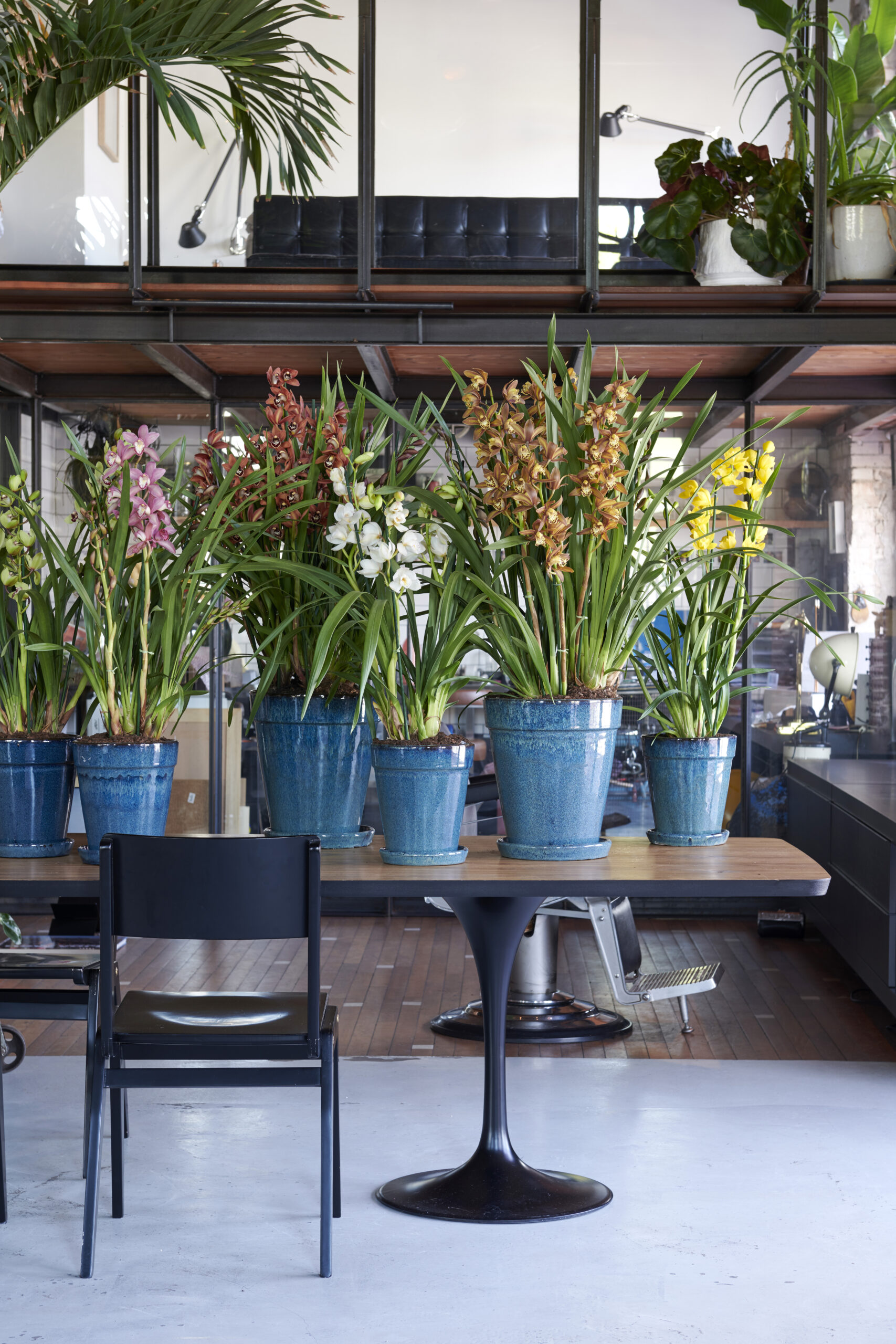
Everything you want to know about the Cymbidium
Long flower stems, large blooms and a preference for cooler temperatures: the Cymbidium is an orchid with slightly different characteristics from many other varieties. It mainly flowers in autumn and winter and can even be placed outdoors temporarily during the summer. But when is the Cymbidium available, how do you care for this orchid and how can you encourage it to flower again? In this article, you’ll find everything you need to know about the Cymbidium.
Everything you want to know about the Cymbidium
The Cymbidium is recognisable by its long flower stems, each carrying six or more flowers. The plant has at least one stem, but often produces several. The older the plant, the more stems it can produce. Cymbidium flowers come in a wide range of colours, from white, yellow, green, pink and red to brown.
The flowers are sturdy and have a rather classic appearance. This means the Cymbidium works well in both modern and more traditional interiors. Another advantage is that the flowers stay looking beautiful for a long time, allowing you to enjoy them for several weeks.

A flowering period of 8 – 10 weeks
The Cymbidium is available from August to March and has an average flowering period of 8 – 10 weeks. Of course, proper care, the right position and the temperature all play an important role in how long the flowers last – see our tips below.
Has your Cymbidium finished flowering? Don’t throw it away. With the right care, the plant can produce new flower stems. Cut off the spent stem and place the plant somewhere cool and light. If the outdoor temperature is above 10°C, you can move the Cymbidium outside to encourage flowering. Just remember to bring it back indoors when temperatures drop below 5°C.

Caring for a Cymbidium
The Cymbidium is generally easy to care for. With these tips, you can keep your plant healthy and enjoy its flowers for as long as possible:
- Give your Cymbidium plenty of light, as this orchid likes bright conditions. However, avoid strong, direct sunlight, as this can scorch the leaves.
- Choose a cool spot in your home, such as a hallway, conservatory, garden room or bedroom.
- Water your Cymbidium once a week by placing the plant in a shallow layer of water for around three minutes, allowing the roots to absorb the moisture. Let it drain thoroughly before placing the orchid back in its decorative pot.
- Keep the temperature between 12°C and 25°C. The cooler the Cymbidium is kept, the longer it will flower.
- For optimum flowering, feed your Cymbidium once a month.
Can a Cymbidium be kept outdoors?
From April to October, you can place a Cymbidium outdoors, as long as the temperature stays above 10°C. Choose a sheltered spot, such as a balcony or patio. Avoid strong afternoon sunlight and opt for a bright spot with indirect light instead. It’s also best to protect the plant from strong winds and prolonged exposure to rain.
Also read: How to create a tropical terrace with orchids